

Robin Davies
Haven’t got much time on your hands? Click here to read the key points.
In this Pinnacle Post interview, Robin Davies - Chief Executive New Zealand & Pacific Islands at BlueScope Steel - reflects on an inspiring career in the steel industry that began as a graduate engineer in Wales and led him to New Zealand which included a formative period in Ohio at BlueScope’s largest North American steel mill. Robin discusses the importance of constantly evolving, pushing yourself outside of your comfort zone, and the reward of seeing people around you grow and succeed.
Q: What did you want to be when you were growing up?
A: I grew up on a farm in South Wales and worked on lots of farm machinery which gave me an interest in fixings things and learning how things worked. Looking back, I probably had a natural affinity for this too. Progressing into engineering seemed to be a reasonably obvious pathway from there. I finished school, went to Cardiff University, and studied a mechanical engineering degree. This built the academic capability alongside the practical affinity for how things worked. I finished the degree and joined a British Steel graduate programme in Llanwern Steelworks in 1996. For a young engineer, the world of steel was endless with things to learn - it was an arena of large, interesting pieces of equipment and interesting people.
Q: After developing your technical skills, what became key as you started your career?
A: Initially, you're a bit of a sponge while figuring out technical things, but over time, what becomes more interesting and rewarding is how effectively you work as a team and get the best out of people. Thrown in the deep end, I transitioned into engineering, maintenance, product development, and operations roles, and in a large organisation like British Steel (which became Corus and Tata Steel in Europe), there are endless possibilities to learn your trade. If you push yourself hard, you’ll find yourself doing more challenging and rewarding things.
Initially, you're a bit of a sponge while figuring out technical things, but over time, what becomes more interesting and rewarding is how effectively you work as a team and get the best out of people.
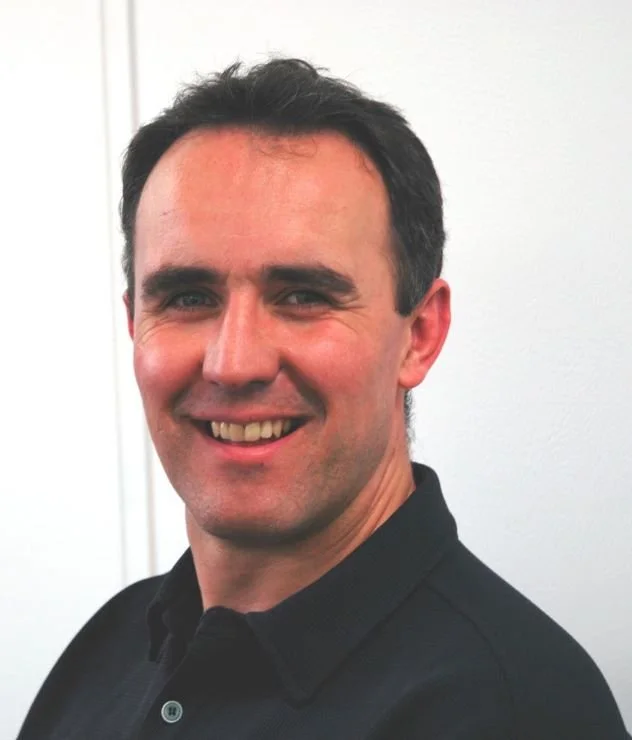
Robin at an earlier time in his career.
Q: What drew you to New Zealand, especially at such an uncertain time during the 2008 Global Financial Crisis (GFC)?
A: I was primarily looking for an overseas assignment with my family; I had one and three-year-old sons at the time, and we were looking for a family adventure. We had no real connection to New Zealand, but BlueScope Steel and New Zealand Steel operated here, and there was an affinity with the industry. It was also a lifestyle choice, as New Zealand is an attractive place to live. We did a motorhome tour around both the North and South Islands at the back end of 2007. I had a couple of job interviews during that trip and was offered a maintenance superintendent job in the steel plant at New Zealand Steel. Three months later, we were here. Moving from the other side of the world teaches you a lot about yourself and how to adapt to new ways of working. I also found that once you make one move, the next one isn’t as difficult as you build that internal confidence.
Moving from the other side of the world teaches you a lot about yourself and how to adapt to new ways of working. I also found that once you make one move, the next one isn’t as difficult as you build that internal confidence.
Q: Your progression through the ranks has been quite inspiring. What philosophy guided your career climb from superintendent up to a General Manager (GM) or Vice President (VP) level?
A: I’ve been fortunate enough to not really focus on pointing towards the next job. Instead, I focus on the task at hand and do the best I can with what’s in front of me. I trust that people around me will recognise if somebody is doing a good job. Opportunities have typically arisen, and I’ve been in a position to put my hand up for them.
I’ve been fortunate enough to not really focus on pointing towards the next job. Instead, I focus on the task at hand and do the best I can with what’s in front of me. I trust that people around me will recognise if somebody is doing a good job.
You’re also a long time working so it's important to ensure that you’re adding as much value as you can and enjoying the journey rather than the destination. Career progression is rarely in a straight line. I believe that things such as a bigger job will sort themselves out if you just focus on what’s in front of you.
Career progression is rarely in a straight line. I believe that things such as a bigger job will sort themselves out if you just focus on what’s in front of you.
Q: How did the required skill set change as you moved from a superintendent to more senior leadership roles?
A: At the superintendent level, there is solid technical content - understanding the assets and making maintenance decisions - balanced with the people content (getting the best out of the team). The transition to a GM or VP role, looking after hundreds of people across operations and maintenance, means you are still relying on your technical background, but it becomes more about the people elements and the commercial elements. You need to help drive culture and build capability in the teams around you. You must also draw on knowledge areas such as understanding a profit and loss and a cash flow statement, which significantly impacts the business. You inevitably can't be in the weeds of the technical detail yourself.
Q: Your transition to President of the North Star steelworks in the United States (US) was a significant shift. What was that experience like?
A: I was the Vice President of Mills and Coatings at New Zealand Steel, and we had just acquired Pacific Steel which I led transition of. This experience had given me good experience in a large profit and loss business. Shortly after, I was given the opportunity to move to Ohio to lead the North Star steel plant. It was a big change, moving from rural Franklin to the middle of Ohio. It was a very high-profile role as North Star has a significant impact on overall profitability for BlueScope. I was fortunate to lead the effort to get a business case to expand North Star, including the installation of a third Electric Arc Furnace and second caster. I found the people in the Midwest to be very humble, hardworking, and straightforward. In the US, you are a very small part of a very large steel industry, which offers a very different sense of scale compared to New Zealand.
Q: How did that role prepare you for your current Chief Executive position?
A: At North Star, my day-to-day involvement in operations became more limited. I was focused on servicing customers, managing profitability, and monitoring risks outside the fence such as tariffs, regulatory changes, or changes in automotive building. This opens your eyes to what’s going on in the outside world. While you are less defined as just an engineer, having that data rational focus, typical of engineers, is a useful character trait for making informed decisions.
Q: In your current role, you’ve had to engage heavily in stakeholder management, particularly with the New Zealand government regarding the Electric Arc Furnace (EAF) project. Was this a new challenge?
A: I have been in this Chief Executive role for four years and going into it, I thought, “What things do I need work on? Do I have all the required skills and knowledge?” There are always things to learn and managing government stakeholders was one of the things I needed to work on. It involved putting forward a compelling, credible conversation to government ministers about energy, trade, and carbon emissions. The EAF technology solution was brought forward to significantly reduce the emissions profile of the business and it was important to get that message across in a very succinct and impactful way for ministers. The experience of negotiating a funding agreement with the government, which included strict parameters and obligations for emissions reduction, was immense and will stick with me for the rest of my career.
The experience of negotiating a funding agreement with the government, which included strict parameters and obligations for emissions reduction, was immense and will stick with me for the rest of my career.
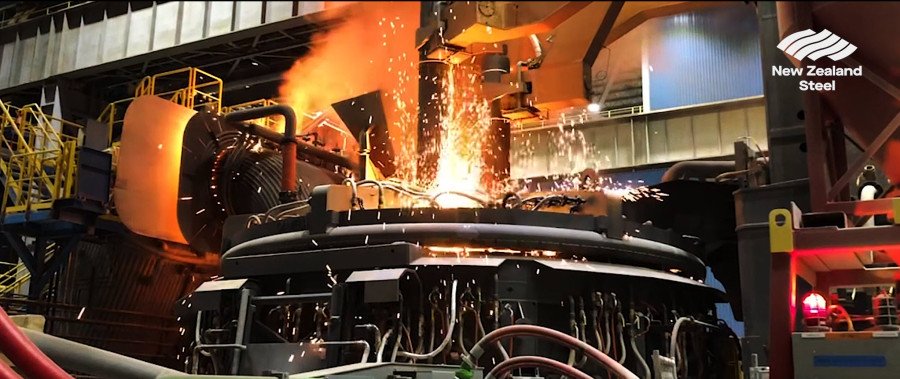
A snapshot of New Zealand Steel’s future steelmaking process - an Electric Arc Furnace.
Q: That sounds like it required more than just technical or commercial knowledge.
A: Absolutely. There's no real textbook for some of these things; it’s far beyond the scope of a university degree. It is as much around the Emotional Quotient (EQ) as it is about the Intelligence Quotient (IQ). EQ helps you understand people, their perspectives and motivations. You must have a strong narrative that the business can stand behind such as that the steel industry is important to the domestic supply chain, that we provide great employment, and that we have a technology solution that reduces emissions. You must be prepared to take some criticism but remain true to the cause.
Q: Moving back to New Zealand from North Star and prior to your current role as Chief Executive, you took on a unique role in Sales and Marketing. Tell me about this move.
A: It was a neat opportunity to come back into the New Zealand business and, importantly, round out my skill set. As an engineer and operations person who had run a business, I had been involved with customers but hadn't directly managed the sales and marketing function. It put me right outside my comfort zone, and was a great lesson that you don't have to know everything to be the leader of the team. I relied heavily on my direct reports and learned a lot from the high-calibre professionals there. I gained a new appreciation for the customer experience and the importance of deriving value from products like Colorsteel™, ensuring we are not just a commodity steel manufacturer. I strongly recommend people to take on these slightly curveball assignments outside their comfort zone.
As an engineer and operations person who had run a business, I had been involved with customers but hadn't directly managed the sales and marketing function. It put me right outside my comfort zone, and was a great lesson that you don't have to know everything to be the leader of the team.
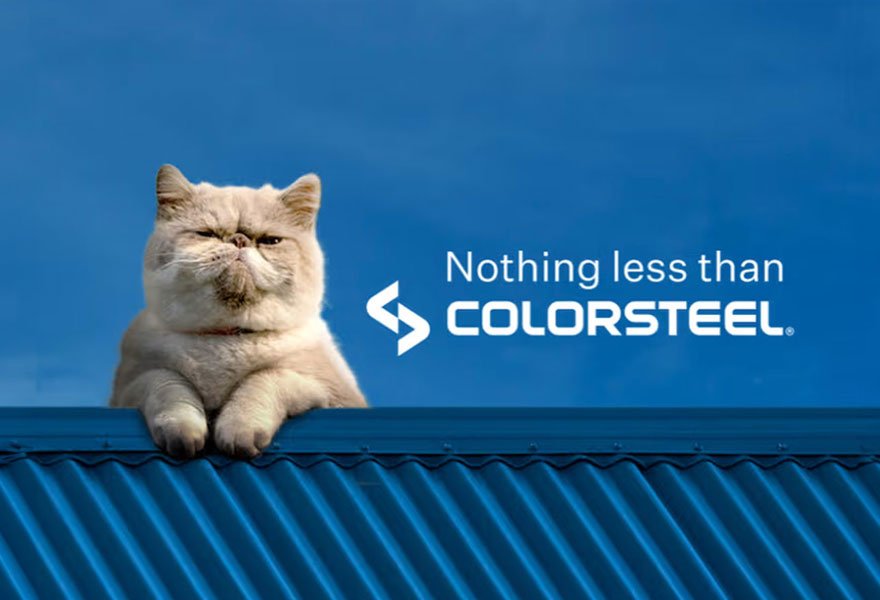
Colorsteel™ - a product of New Zealand Steel.
Q: Would you say that constantly adding new capabilities is the main thing that enabled your growth across such a range of roles?
A: If you want to experience new things and do more challenging and rewarding things, you must be able to add new pieces on while taking the rest of your experience with you. In some ways, you are reinventing yourself at certain points in your career. You want to be thought of as a person with a new skill set rather than just the person people remember from 10 years ago. For example, gaining an appreciation and understanding of the market and the value proposition is important if you want to progress into leading businesses or senior manufacturing roles, and it makes you more effective. Having that appreciation, like I gained in the sales and marketing role, was a good concept.
You want to be thought of as a person with a new skill set rather than just the person people remember from 10 years ago.
However, the ability to succeed across a range of roles is also dependent on the people around you. I was lucky that other people observed certain skills or attributes in me that I probably didn't recognise myself. They were able to observe these attributes because I was focused on doing everything to the best of my abilities. I was often able to be pulled into new things to expand my skill set.
The continuous addition of skills is vital as is the willingness to take them on. This ability to recognise attributes in others is something I now strive to do with team members I lead, trying to build and develop them and stretch them along the way, just as people did for me. That is the most rewarding part of the job.
This ability to recognise attributes in others is something I now strive to do with team members I lead, trying to build and develop them and stretch them along the way, just as people did for me. That is the most rewarding part of the job.
Q: Can you share what you consider your key career highlights and lowlights?
A: If I start with the lowlights, it is when anybody has been hurt in a business that I’ve worked in. Given the nature of what we do, the number of people, and the exposure, you are never too far away from something that is serious. I’ve also been through several steel cycles and financial cycles that make running a business quite tough. These tough periods - dealing with weak market conditions, energy cost issues, international pricing, or internationally dumped steel - really tests you in terms of how you manage a business through such a cycle, and you must find all the tricks in the book to try and navigate the business through that. You learn from them, but they are inevitably tough.
In terms of highlights, I generally think about all the people that helped me early in my career, who mentored and imparted knowledge in me. From my days in British Steel and coming into BlueScope, I’ve worked for a handful of very capable and insightful leaders over time who showed a lot of faith in me and created opportunities. This allowed me to keep doing my thing and enjoying the different roles.
You need to surround yourself with good people in general terms. That is an important "ticket to the game" in any organisation, and it’s a non-negotiable for me. I wouldn't work for BlueScope if I didn't think there were good people around me.
There have also been specific business highlights and milestone moments:
• The acquisition of Pacific Steel.
• Going to work at North Star.
• Getting the North Star expansion project approved, which was the largest BlueScope project we had ever done at the time.
• Getting the Electric Arc Furnace (EAF) project approved at New Zealand Steel. It will be even more of a highlight when we start making steel with it.
However, the biggest highlight has been seeing people grow and develop. Ultimately, while the big milestones are very cool and rewarding, I think it’s probably the people aspect that is the most rewarding. Seeing people progress and being able to create those opportunities for them are the biggest highlights.
However, the biggest highlight has been seeing people grow and develop. Ultimately, while the big milestones are very cool and rewarding, I think it’s probably the people aspect that is the most rewarding.
Q: How do you manage the stress and pressure of this demanding role while maintaining your personal life?
A: Having fun with family outside of work and having a true sense of purpose ensures that work never dominates everything. My wife and three sons quickly remind me of this. The key is to be present with family, not just physically. I’ve also found that getting a good exercise routine helps with sleep and overall wellbeing, particularly managing the fatigue from traveling. I also engage in active relaxation that is completely separate from making steel, such as pulling an old tractor to bits or riding a motorbike.
Q: What is your core advice for young professionals looking to transition from technical roles to business management and leadership?
A: At the core is the ability to interact with and get the best out of the people around you. That's the main people aspect to add to the technical side. Then, you add layers of commercial knowledge and perspective. You need to be looking up and out - understanding what is going on in the news, the energy sector, the building sector, and globally. I spend a couple of hours a day reading news about the New Zealand and global economy. Interacting with business leaders in network forums also helps to build that breadth of perspective. The better you understand the context you are working in, the more effective you will ultimately be. Understanding yourself, others, and noting the differences boils down to being a good person.
You need to be looking up and out - understanding what is going on in the news, the energy sector, the building sector, and globally. I spend a couple of hours a day reading news about the New Zealand and global economy.
Q: You have emphasised the value of experience. What is your outlook on the future for people working in the heavy industrial and manufacturing space, and do you recommend young professionals seek international exposure?
A: There is a challenging backdrop for the heavy industrial sector in New Zealand, driven by energy costs and sometimes a lack of value placed on the importance of retaining a domestic steel industry. However, we are navigating these challenges, such as our sustainable pathway with the EAF project.
I would encourage young professionals to contemplate international exposure at the right point in their career. It is important that you do your homework on where and who you will be working for and the types of opportunities that exist. Kiwis have a lot to offer international businesses; they are generally self-starters, innovative, and good culturally. Because New Zealand has a relatively small industrial base, people tend to be quite rounded and adaptable, having been involved in a range of different roles, which is helpful overseas.
I would encourage young professionals to contemplate international exposure at the right point in their career. It is important that you do your homework on where and who you will be working for and the types of opportunities that exist. Kiwis have a lot to offer international businesses; they are generally self-starters, innovative, and good culturally.
Q: What does Robin stand for?
A: I like to work with good people and a business that's trying to do the right thing. This involves creating value in a broader economic sense and a community sense. These sorts of businesses train and develop all sorts of very capable people, providing skills and knowledge, and hopefully an employment base that allows them to be successful.
I also stand for having a business that is aspiring to be around for a long time, even when it has challenges, such as those surrounding carbon emissions, and finding a way through. I certainly stand behind what we do as a company, both New Zealand Steel and BlueScope, and all the business ethics that come with that.
On a personal level, I just try to be the best husband and father I can be in amongst all of that. I really enjoy seeing my sons move into adulthood now, observing the cool people they are turning out to be and the cool things they are doing.
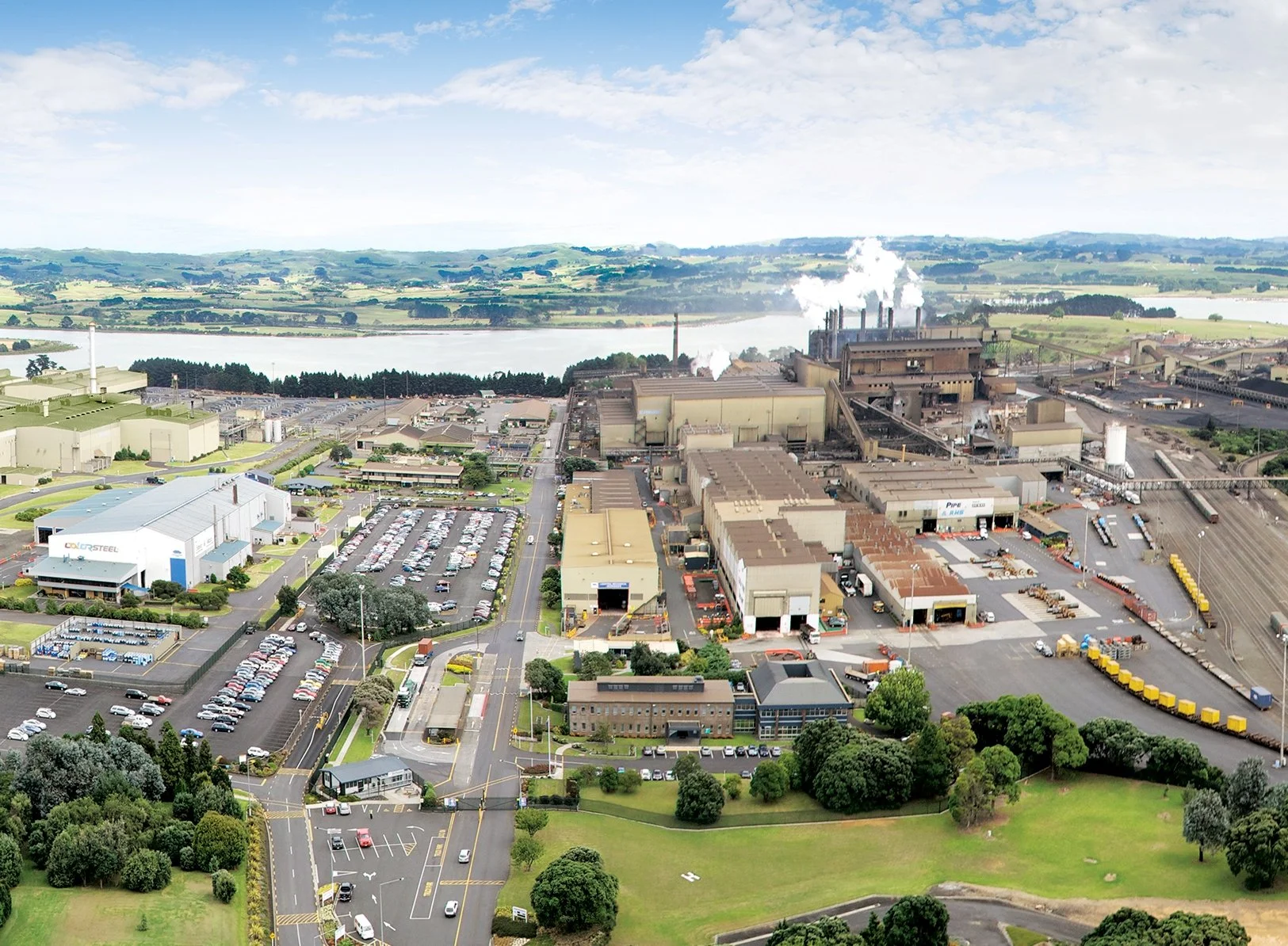
Aerial view of New Zealand Steel where Robin is based.
Q: Many of our readers are young professionals who are beginning to think about their financial futures. Do you have any general advice or wisdom you could offer them?
A: I’m not often called on for personal financial advice, but I think about this as my own sons move into the workforce. My first piece of advice is to figure out what you want to do and where you want to be before the weight of financial commitments really takes hold. I would much rather see a young professional take an overseas trip or assignment than think too much about the financial commitments that come with establishing yourself too early.
My next piece of advice is that you must make sure you are valued properly for the skill set you bring. If you work for a good organisation where there is mutual trust, they will typically look after you and reward you in the right way. I also think there is a benefit to consistency with an employer. When I see a CV where someone has changed companies every two years, it doesn't always come across as a positive attribute; showing you can stick at something for a while is valuable.
Finally, financial success is really defined by how you want to live and be rewarded. While you should definitely deal with debt as soon as you can - because compounding interest will eventually creep up on you - I wouldn't be overly focused or frugal in the early stages of your career. You want to live and experience as much as the world can offer. If you focus on gaining those experiences, many of those financial things will resolve themselves as time goes on.
I wouldn't be overly focused or frugal in the early stages of your career. You want to live and experience as much as the world can offer. If you focus on gaining those experiences, many of those financial things will resolve themselves as time goes on.
Q: What advice would you give your younger self?
A: I have no regrets about the journey. The advice would be to recognise your natural characteristics and start working on them as quickly as you can. For example, I am a natural introvert, which required me to push myself to be more sociable and interact more. You need to push yourself into spaces that are a bit uncomfortable because that is where growth comes from. For me, that meant tackling things like presenting to large groups, which would have been horrific in my university days, but there is no escaping it in senior roles. Get feedback from people and keep pushing those boundaries.
You need to push yourself into spaces that are a bit uncomfortable because that is where growth comes from.
Q: If neither time nor resources were a constraint, what ultimate goal or dream would you pursue?
A: I really like the rural lifestyle. If I was doing something else now, I’d be farming. I may still end up doing that at some point in the future.
About BlueScope
BlueScope is a global steelmaker headquartered in Australia, known for coated and painted steel products and building solutions that serve construction, infrastructure and manufacturing across the Asia–Pacific and North America. Its portfolio includes well‑recognised brands such as COLORBOND (Australia) and COLORSTEEL (Aotearoa New Zealand), alongside steelmaking and downstream operations such asNew Zealand Steel and North Star BlueScope Steel in the US.
Visit the website here: https://www.bluescope.com/
About New Zealand Steel
New Zealand Steel operates the Glenbrook steelworks south of Auckland, transforming locally sourced ironsand into flat steel products that underpin building, infrastructure and manufacturing nationwide. Part of BlueScope, it supplies hot‑rolled coil, galvanised steel and the iconic COLORSTEEL range to projects across Aotearoa.
Visit the website here: https://www.nzsteel.co.nz
About North Star
North Star BlueScope Steel is a scrap‑fed electric arc furnace mini‑mill in Delta, Ohio, producing high‑quality hot‑rolled coil for manufacturers across the US Midwest. It is BlueScope’s largest mill in North America and is known for lean operations, tight customer partnerships and reliable delivery, North Star continues to invest in capacity and product capability. As part of BlueScope, it pairs a strong safety culture with lower‑emissions EAF steelmaking that supplies automotive, construction and agricultural markets with consistent, locally produced steel.
Visit the website here: https://nsbsl.com/
About Tata Steel
Tata Steel is a global steelmaker within the Tata Group, supplying flat and long steel to automotive, construction, infrastructure and industrial customers across India, Europe and beyond. With deep metallurgical expertise and a strong safety culture, it operates both integrated and mini‑mill routes while investing in lower‑emissions steelmaking, recycling and product innovation. From advanced automotive grades to coated building solutions, Tata Steel focuses on quality, reliability and long‑term customer partnerships.
Visit the website here: https://www.tatasteel.com/
About Corus
Corus was formed in 1999 through the merger of British Steel and Dutch firm Hoogovens, creating a leading European steel company with deep industrial heritage and modern steelmaking capability. It supplied a wide range of products to construction, automotive, rail, and engineering markets, focusing on quality, efficiency, and customer partnerships. In 2007, Corus became part of Tata Steel; its legacy continues under Tata Steel Europe with a stronger emphasis on innovation and sustainability.
Visit the website here: https://www.tatasteel.com/
About Llanwern Steelworks
Llanwern Steelworks, near Newport in South Wales, is a Tata Steel UK site specialising in high‑quality cold‑rolled and galvanised steels for automotive and construction supply chains. Opened in the early 1960s, it has evolved from an integrated steelworks into a modern finishing hub, pairing advanced annealing and coating lines with a strong focus on safety, efficiency and customer partnerships.
Visit the website here: https://www.tatasteeluk.com/construction/sustainability/performance-at-our-sites/llanwern
