

Sarah Rawcliffe
Haven’t got much time on your hands? Click here to read the key points.
In this Pinnacle Post interview, Sarah Rawcliffe - Managing Partner of Harkness Henry - reflects on her inspiring career from the initial goal of being a PE (Physical Education) teacher to becoming a lawyer. She shares her experience in big law, living in London, moving home and joining Harkness Henry, and her journey into governance through the incredible True Colours Children’s Health Trust. Sarah also discusses the importance of authenticity and gives great advice for people looking to progress in their careers while emphasising the importance of enjoying life.
Q: What did you want to be when you were growing up?
A: I had many different aspirations during my childhood. I briefly had visions of teaching, as many kids do, but then realised I would be terrible at it. I also really enjoyed the advanced PE (Physical Education) programme at Hillcrest High School and was enrolled to go down and study PE at the University of Otago. People find that really funny now because I am incredibly clumsy, and I would have been terrible at PE. I think I've ended up in the right place, but I definitely wasn't growing up thinking I wanted to be a lawyer.
I definitely wasn't growing up thinking I wanted to be a lawyer.
Q: What ultimately shifted your path away from PE and toward law?
A: My mother passed away at the end of my sixth form year (year 12), and my dad wanted me to stay in Hamilton. He suggested that my mother would have wanted me to do law and management - he was very specific, even about the majors. So, 30 odd years later, here I am. I’m sure my life would be very different if I had gone through with my original goal of being a PE student.
Q: When you graduated from the University of Waikato (UOW) with your law and management degrees, you had both the legal and business routes open to you. How did you decide to pursue law?
A: I was very lucky to be offered two summer clerk positions in my final year: one at a law firm and one at an accounting firm. I felt I was going to be stronger on the law than the numbers as I wasn't a huge numbers person. Summer clerking is a fantastic opportunity to see what legal life is like, and once I started my clerkship in an Auckland firm, I absolutely loved it and knew that was what I wanted to do. That said, my management degree majors were in marketing and economics, and I’ve been able to use those marketing skills to help with Harkness Henry’s marketing and branding. I’ve been lucky to combine both fields.

Sarah during her admission to the bar in 2003.
Q: You mentioned starting out in a big Auckland firm. Did you feel pressure to seek out "big law"?
A: Summer clerking roles at the big Auckland and Wellington were incredibly hard to get back then. Not many Waikato students got those roles because Waikato was a newer law school and was often seen as a second rate institution. However, a group of us did secure positions in those big firms and I am very grateful that I got the chance to work in a big firm because I now know what it’s like. I worked at Phillips Fox (now DLA Piper) and loved my time there; I felt really supported by great partners who taught me a lot and it was an exciting time as a junior lawyer in Auckland.
Waikato was a newer law school and was often seen as a second rate institution. However, a group of us did secure positions in those big firms and I am very grateful that I got the chance to work in a big firm because I now know what it’s like.
Q: Big law is known for its intense culture. What was that environment like?
A: It is extremely competitive and that is the culture created in some of those firms. Success depends on how long you can sustain that way of working and whether it suits what you want to achieve from your life. You get great opportunities with big clients and big cases so it can be a fantastic opportunity for a junior or intermediate lawyer to go and give it a try.
You get great opportunities with big clients and big cases so it can be a fantastic opportunity for a junior or intermediate lawyer to go and give it a try.
Q: After your time in Auckland, you jetted off for your OE (overseas experience). Was that always part of the plan?
A: Yes, I did what used to be the standard path and get a couple of years of experience and get on the plane. My parents did it, and it was always my mindset to go live in London for a couple of years. My husband and I went together and had a blast.
Q: For our young professional readers who are considering doing an OE, what would your advice be?
A: Absolutely go and do it. It is an amazing experience. You gain that life experience of living somewhere else, traveling independently, and immersing yourself in a new place. You can travel everywhere such as jetting off to France for the weekend, or even going to America over long weekends, as we did. People worry it will impact their career, but my view is it won't. If you pick up work in your industry there, you are still gaining experience and you have so many years to work in New Zealand when you return.
People worry it will impact their career, but my view is it won't. If you pick up work in your industry there, you are still gaining experience and you have so many years to work in New Zealand when you return.
Q: You ended up staying three and a half years in London. Was it hard to return home after loving it so much?
A: It was incredibly hard. We only planned to do two years. I really struggled to come home, and for quite a few years, I kept suggesting, "Let's go back to London". I enjoyed being back, but the adjustment to such a different lifestyle was difficult. Also, coming home meant it was time to get serious and get on with my career. I realised, "Oh gosh, now I've got to grow up".
Q: How did you find your way to Harkness Henry here in Hamilton?
A: I was quite lucky because a friend I had in London had a brother working here, so I reached out and secured an interview. This was in 2007 when the financial crisis was starting to hit. I had done a lot of insolvency law at Phillips Fox before London, so I leveraged that experience, even though I never thought I wanted to do it, and I was lucky to secure a job in the litigation team.
Q: Was there a mindset shift coming from a major Auckland firm to a regional firm?
A: I must admit I was a bit snobby about what the legal work would be like after working in a big Auckland firm, but I quickly realised that was absolutely wrong. We have great clients, and many bigger Auckland clients use Hamilton firms because we have just as much skill and we’re much cheaper. I also found it easy to fit in here. Harkness Henry had, and still has, a really awesome team and great culture.
We have great clients, and many bigger Auckland clients use Hamilton firms because we have just as much skill and we’re much cheaper.

Harkness Henry partners.
Q: You’ve climbed the ladder to Managing Partner which you have been in since March. Was partnership always your ambition?
A: My father has always encouraged me to keep progressing and I have always seen partnership as the ultimate goal of what I wanted to achieve. I naturally view life as a journey of constant improvement and development, and progression in the firm generally comes with that.
I naturally view life as a journey of constant improvement and development, and progression in the firm generally comes with that.
Q: As Managing Partner, how has your role changed? Are you still deep in law work, or is it more management now?
A: It’s a mixture now. When I became a partner, I took responsibility for a team, ensuring they developed and delivered for clients. The Managing Partner role has different elements. We decided not to replace the CEO when they left because I really enjoy the management, people, and strategy side of the firm so I’m taking on more responsibility there. However, I love being a litigator and love going to court, so I’m not prepared to give up that work. Clients often want the partner doing that end delivery work, so I juggle it, relying on our great people and delegating effectively.
Q: You enjoy being in court, which many people find terrifying. What is the appeal?
A: Look, it can be terrifying even when you're experienced, because you don't know what will happen, but that's part of the buzz of doing it. I’ve had really good mentors who guided me and pushed me to develop my courtroom skills. If you don't go in feeling nervous, you're not going to do a good job. You need those nerves because you're up against someone else, and the judge might hate your argument or ask unexpected questions. It requires you to be extremely prepared and have the skills to adapt. It's not like Suits; usually, it takes about 18 months to get to court, but you still have those moments when someone says something unexpected that really helps you. It’s that feeling of fear but doing it anyway and then feeling really energised by it.
It's not like Suits; usually, it takes about 18 months to get to court, but you still have those moments when someone says something unexpected that really helps you. It’s that feeling of fear but doing it anyway and then feeling really energised by it.
Q: Were you into mooting or debating during school or university?
A: I didn't do any debating in school, but I did the competitions at university. When I was a summer clerk, I had rotations in property and litigation, and I realised I naturally fit with litigation. Litigation is my area of law because it requires the ability to confidently speak, think quickly, and answer on your feet. This is contrasted with a great commercial or contract lawyer who needs absolute attention to detail and prefers quieter thinking moments.
Q: How do you manage the stress of balancing this demanding work - the legal practice, the managing partner responsibilities, and the courtroom with your personal life?
A: My view is that life is the most important thing, so that is my priority. I have my husband and two children, and I also do charity work. I will always prioritise my family, my life, and my well-being over my work. I aim to make time for friends and have really good quality time with my kids and to ensure that I’m not constantly running on stress. I try to message this to our team that when they have family obligations, they need to go, because work will always be here. We are lucky to be a big firm with 50 people, so we have enough staff to cover each other when needed.
I try to message this to our team that when they have family obligations, they need to go, because work will always be here.

Sarah enjoying family time.
Q: Looking back on your career, what do you think are the key moments that shaped your path to success?
A: Obviously, I am really happy that I decided to come to Harkness Henry, as I was fortunate to get into such a good firm and manage to stay here. Other key moments are probably those that involved people who supported and guided me along the way. I have had a reasonably straight career track, remaining at one firm, due to having people there to support and encourage me during those first 10 years, and later working with great leaders who showed me how to lead well and grow into a partnership role. It has not been easy, and I've had people say, "We don't think you are partnership material," which was really hard to work through, but I had enough people back me in the firm to keep going and gain the confidence to say, "No, I can do this".
It has not been easy, and I've had people say, "We don't think you are partnership material," which was really hard to work through, but I had enough people back me in the firm to keep going and gain the confidence to say, "No, I can do this".
Q: You are the first female Managing Partner in Harkness Henry’s 150-year history. What was that journey like, and did you face unique challenges?
A: It is nice to finally have a female managing partner; it seems outrageous that it’s taken this long. Getting here was a challenge. I must admit, I have experienced pushback, which is disappointing. I think part of the clash comes from my leadership style, which is much more relaxed and focuses on people before the numbers. If people believe leadership is all about the numbers, they clash with my style. I have been lucky to stick to who I am and have had others in the firm align with me.
If people believe leadership is all about the numbers, they clash with my style.
Q: We are seeing more emphasis now on parental responsibilities for both mothers and fathers. How is that shift impacting the ability of women to reach leadership positions?
A: There has been a big mindset shift regarding parental responsibilities, moving towards a view of working parents rather than just working mothers. I think the split in roles where it's not just the female who gives up their career is crucial. People work incredibly hard to get their law degrees and if you take a career break, it can put you on hold and cause you to fall behind. It is really important to let people know that we encourage them to have children and continue their career. We need to work out the best ways to support people, whether through flexible working or ensuring they feel valued upon return.
I think the split in roles where it's not just the female who gives up their career is crucial. People work incredibly hard to get their law degrees and if you take a career break, it can put you on hold and cause you to fall behind.
Q: What does personal development look like for you?
A: As a strong personality, a lot of my recent personal development has been focused on my leadership and communication style to make sure it works for everyone. We invest a lot in leadership training at Harkness Henry because we are lawyers who haven't been trained to lead and manage people. During my career, personal development involved taking new opportunities, keeping up with legal issues, and pushing myself on cases
Q: Beyond your legal work, you are heavily involved in the True Colours Children's Health Trust board. Tell me about your governance journey.
A: I have been involved with the trust for 15 years. I initially thought it would be good for my CV and professional development, which is true. But it has given me so much more. The former CEO, Cynthia Ward, is an amazing person who taught me a lot about the value of people, compassion, and passion for what you’re doing. Being on the board, particularly in the not-for-profit sector, broadens your mindset, teaching you how to run an organisation on nothing and exposing you to other parts of society you might never see.
Being on the board, particularly in the not-for-profit sector, broadens your mindset, teaching you how to run an organisation on nothing and exposing you to other parts of society you might never see.
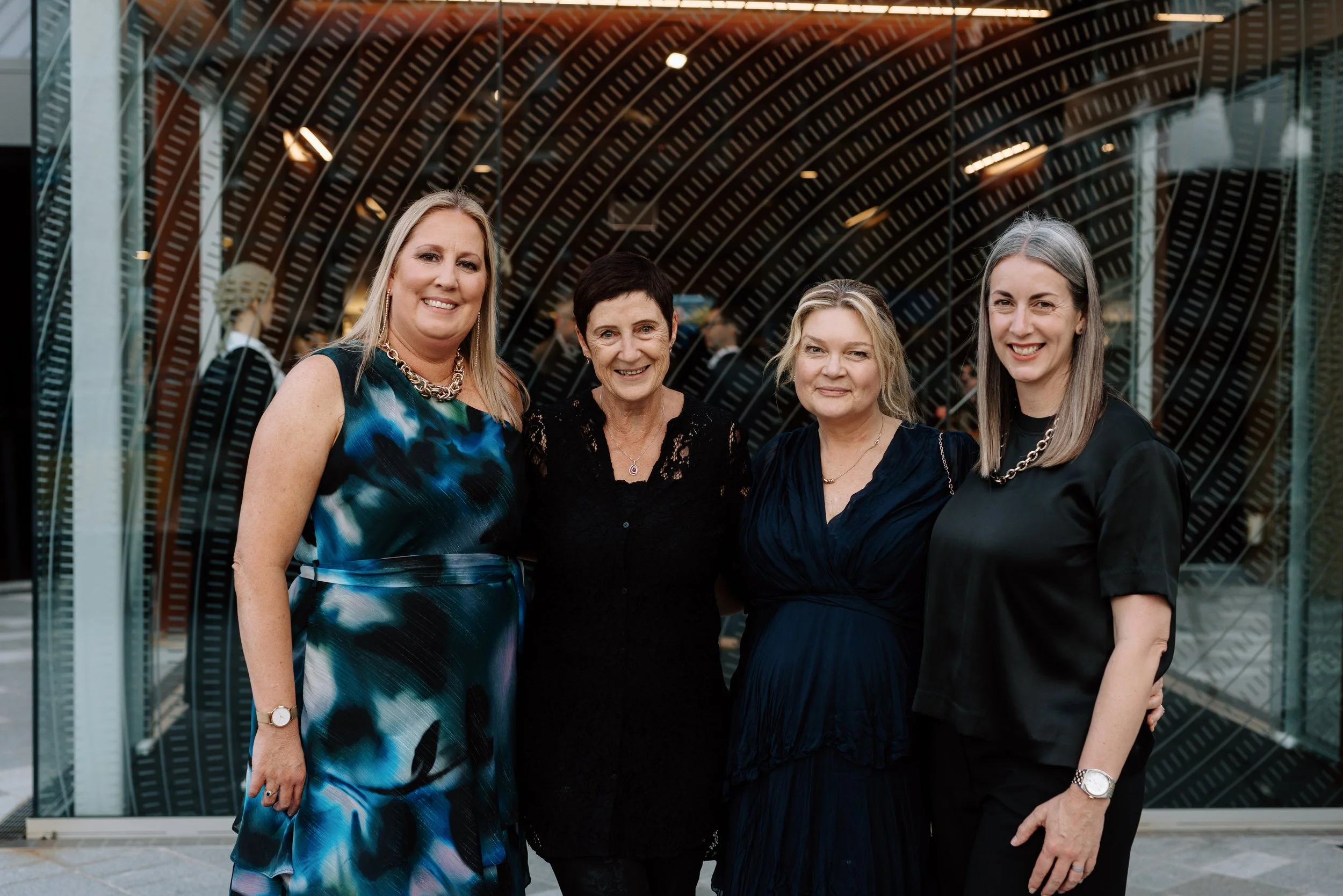
Sarah at a True Colours event.
Q: What advice would you give young professionals aspiring to get onto a board?
A: Absolutely start on a not-for-profit board. You will learn how a board runs, how to work with different personalities, and what it’s like to be in a governance role. Plus, there is the feel-good factor of giving back. It’s a good stepping stone, as you won't immediately get on the board of a major company. People on those not-for-profit boards are often on commercial boards, so you make valuable contacts that can open doors to other opportunities.
Absolutely start on a not-for-profit board. You will learn how a board runs, how to work with different personalities, and what it’s like to be in a governance role.
Q: What is next for Sarah? Do you have any plans on eventually being on more boards and going further down the governance pathway?
A: I have been considering being on more boards, but I’ve only just come into the Managing Partner role, so I am going to be dedicating my time to that. It is something I would eventually be interested in doing but I’m not sure what is next, so I am just going to go with it, keep saying yes to things, and look at opportunities. We have so many fabulous things happening in the Waikato, so it's about figuring out what the good things to be on are. My priority at the moment is making sure others get those opportunities as well. I am currently in the phase of growing the people around me, giving them opportunities, whether it's here at Harkness Henry or on other organisations' boards. That is my focus at the moment, and as time moves on, I will think about what else would be out there that I’d enjoy as well.
Q: What does Sarah stand for?
A: I stand for making life a really good life. It’s about being a good person, treating people well, growing people, and making sure people prioritise the right things in their lives. I want everyone at Harkness Henry to feel valued and treated well.
Q: What advice would you give to lawyers reading this who aspire to become a partner or managing partner?
A: Stay true to yourself. Acknowledge that you sometimes have to do things you don't like, and you will have hard knocks; but if you continue to align with the organisation's goals, keep moving forward, focus on constant improvement and growing yourself then you will be in good stead. If you find you are not moving forward, look for other opportunities that might be a better fit. Align yourself with the right organisations, the right people, and the right attitude.
Stay true to yourself. Acknowledge that you sometimes have to do things you don't like, and you will have hard knocks; but if you continue to align with the organisation's goals, keep moving forward, focus on constant improvement and growing yourself then you will be in good stead.
Q: Many of our readers are young professionals who are beginning to think about their financial futures. Do you have any general advice or wisdom you could offer them?
A: I was lucky that when I came out of university, getting into real estate was more achievable. I was fortunate enough to buy a property in Auckland with my partner which has set us up really well. It seemed like a big commitment at the time as we had flatmates to save costs and we didn’t go out for brunch or incur other similar expenses. Although we were still living a good life, we prioritised the mortgage. We realised that you can still have fun without spending lots of money, such as catching up with friends at their house with a bottle of wine from the bottle store, rather than buying an $80 bottle of wine at a restaurant. If you set yourself up really well, you can go buy all those bottles of wine later.
Q: What advice would you give your younger self?
A: People often see me as a confident person, but I don't necessarily feel that I always have been. I suppose the main advice is to keep backing yourself. I even had doubts for this interview after seeing the high calibre of people you’ve interviewed, but my PA reminded me, "Look at you. You're the Managing Partner of a law firm". So, it is about realising that and having confidence in yourself, pushing yourself forward, and making sure you align yourself with the right people (which luckily has happened for me). And ultimately, just value life.
Q: If neither time nor resources were a constraint, what ultimate goal or dream would you pursue?
A: I would love to own a luxury lodge with lots of land by the sea. People would fly in on helicopters and there would be a range of activities and fantastic food and drink. I would love to be able to host people and families who were going through tough times to give them some respite and joy.
About Harkness Henry
Harkness Henry is a Hamilton-based law firm supporting businesses, public sector organisations, and individuals across the Waikato and wider New Zealand. They provide practical, commercially focused advice across commercial, property, employment, and dispute resolution, with strong local relationships and a solutions‑driven approach.
Visit the website here: https://www.harknesshenry.co.nz/
About DLA Piper
DLA Piper is a global law firm supporting organisations in New Zealand and worldwide with pragmatic, commercially focused legal advice. Their teams span corporate and projects, regulatory and disputes, with strong cross‑border capability across sectors such as infrastructure, energy, technology and real estate. For major programmes, they bring depth in procurement, contract strategy, project finance and risk management.
Visit the website here: https://www.dlapiper.com/en-nz
About University of Waikato
The University of Waikato is a leading tertiary institution in Aotearoa New Zealand, renowned for innovative research, diverse academic programmes, and a vibrant campus culture. With world-class teaching and strong industry connections, Waikato empowers future-ready graduates to make real impact across New Zealand and beyond.
Visit the website here: https://www.waikato.ac.nz/
About Hillcrest High School
Hillcrest High School is a co‑educational secondary school in Hamilton, New Zealand. It offers a broad curriculum with robust academic pathways and a wide range of arts, sport and co‑curricular programmes, underpinned by a strong focus on student wellbeing and community. A great local option for learners seeking choice, challenge, and opportunities beyond the classroom.
Visit the website here: https://www.hillcrest-high.school.nz/
