

Ashley Mason
Haven’t got much time on your hands? Click here to read the key points.
In this Pinnacle Post interview, Ashley Mason - Head of Delivery at Sentinel Homes Waikato - reflects on her career switch from executive assistant to leading delivery in New Zealand’s construction sector. She speaks candidly about embracing vulnerability, building resilience, sharpening financial smarts, and saying yes to big changes. An inspiring, practical read for emerging leaders and anyone weighing their next move.
Q: What did you want to be when you were growing up?
A: I didn't know what I wanted to be. I didn't really enjoy school, though I had a natural ability and a real knack for maths. I was doing university math, statistics, and calculus by seventh form (year 13) and ended up enrolling in university after school because I didn't know what else to do. I received a full scholarship to study secondary school teaching; there was even a financial incentive of around a $30,000 bonus payment if I completed the studies and taught for two years, which was very incentivising.
Q: That sounds like a dream start! What happened next?
A: I went off to university and absolutely hated it. I was rubbish and flunked at everything as I was more interested in drinking and going out. At the end of the first year, I pulled out. I ended up working for the next 15 years as an Executive Assistant (EA).
Q: What prompted your eventual career shift into construction after 15 years as an EA?
A: It wasn't until after I had my second child, my son, that I had a moment. I realised, "What the hell am I doing with my life?" I was working eight hours a day, away from my kids, without even enjoying the job or getting anything out of it. My kids ultimately gave me the push to really look at what I was doing and challenge myself.
It wasn't until after I had my second child, my son, that I had a moment. I realised, "What the hell am I doing with my life?" I was working eight hours a day, away from my kids, without even enjoying the job or getting anything out of it. My kids ultimately gave me the push to really look at what I was doing and challenge myself.
I was working at LIC (Livestock Improvement Corporation), which was a very cushy, well-paid job in a big company with great bosses. I honestly could have easily stayed there forever, but I knew I was good at maths and enjoyed the building industry, so I decided to enrol in the New Zealand Diploma in Construction (Quantity Surveying) qualification to become a Quantity Surveyor (QS).
I then applied for an accounts administrator role at Sentinel Homes Waikato which was a pretty big step backwards pay-wise, but I thought, "it's now or never. I need to just take the punt and go for it".
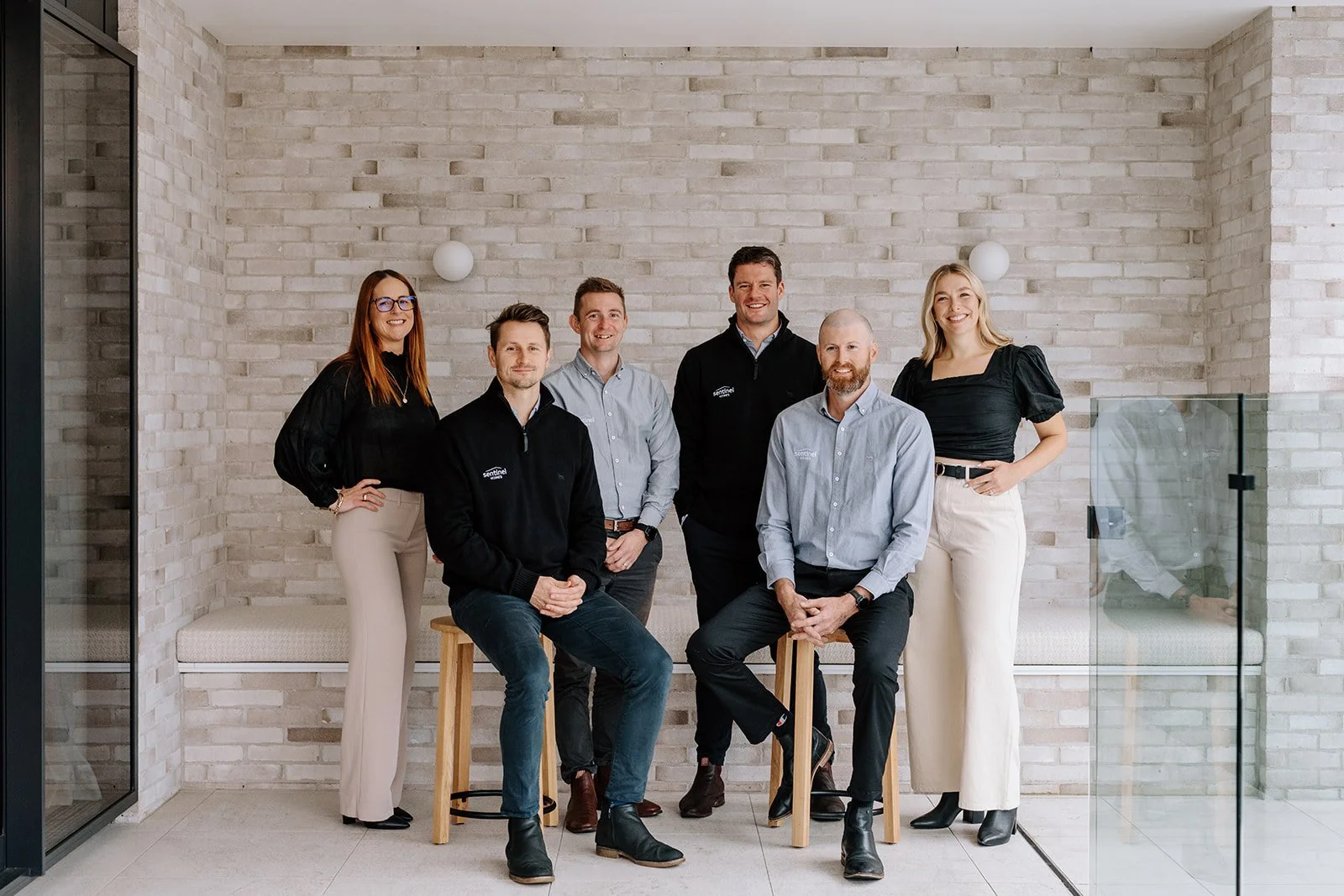
Ashley and some of the Sentinel Homes Waikato team.
Q: Your 15 years as an EA meant working closely with senior executives. Were there key learnings from that period that you brought into your current leadership role?
A: Absolutely. I worked for some amazing people and probably didn't realise the fundamental impact they were having on my life at the time. Looking back, I had very limited self-belief and told myself I wasn't career-driven, which fit the narrative of supporting others as an EA. That was a complete load of bollocks, though. The EA space was a really safe environment, and I lacked the self-belief to push myself outside of that comfort zone.
My last General Manager (GM) at LIC had the most impact on me, even though I only worked for him for about six months. He was extremely intentional with his time and had an incredible balance of being a manager and a leader while also looking after himself. He was unapologetic about who he was, and I learned so much from him, especially watching him observe meetings rather than constantly dominating the conversation.
Looking back, I had very limited self-belief and told myself I wasn't career-driven, which fit the narrative of supporting others as an EA. That was a complete load of bollocks, though.
Q: That self-care and intentionality seems significant, especially coming from the often intense corporate world.
A: It was huge, and it was against the corporate culture I had grown up around. I recall him scheduling yoga at lunchtime every Wednesday, and nobody was more important than that time. Even if the CEO wanted a meeting, that time was non-negotiable. As an EA, I thought he was nuts. I had worked for executives who worked ridiculous hours - 7:00 a.m. till 3:00 a.m. the next morning, but my last GM showed me a different style of leadership that was more about people, connection, and knowing yourself. I now understand that this behaviour of showing himself respect is leading by example. I lean back on those lessons frequently.
I had worked for executives who worked ridiculous hours - 7:00 a.m. till 3:00 a.m. the next morning, but my last GM showed me a different style of leadership that was more about people, connection, and knowing yourself. I now understand that this behaviour of showing himself respect is leading by example.
Q: You started in an admin role at Sentinel Homes and are now Head of Delivery. What enabled this significant personal and professional growth?
A: There are a few components.
Firstly, the internal desire. Nothing was going to happen until I was willing to commit, put in the hard work, and genuinely want to grow.
Secondly, having the right people and resources around me. I’ve been extremely lucky to have Nate (Managing Director of Sentinel Homes Waikato), who supported me from the start. He pushed and challenged me, forcing me into an uncomfortable place. I was used to living in that comfort zone of the EA space, and I had to step outside of that to grow. I had to grow as a person because previously, I thought I wasn't cut out for leadership because I was lacking the right attributes.
Finally, personal support was crucial, especially when I was studying vocational education part-time while working full-time and raising two kids - it was madness! My amazing husband, my mum (who unfortunately passed away two years ago), and my dad supported me wholeheartedly. I struggle to see how you can achieve this level of change without that personal support.

Ashley and a colleague discussing a project.
Q: With your current responsibilities, how do you manage the pressure and stress of career and life?
A: I've improved a lot at this, and it honestly doesn't really bother me anymore. I’ve been on a five-to-six-year non-stop personal development journey, fuelled by my love of learning which is now one of my top values.
Managing stress involves understanding what it is and maintaining physical and mental balance through basic things such as exercising, eating right, meditating, and journaling. Recently, cutting out alcohol has also helped a lot.
However, the biggest change came from a life-altering experience when my mum was diagnosed with lung cancer and passed away at 58. We cared for her at home for a year and nothing compares to that experience. This loss fundamentally changed me and put everything into perspective. Now, things like stress at work or financial worries register as privileges rather than problems.
This loss fundamentally changed me and put everything into perspective. Now, things like stress at work or financial worries register as privileges rather than problems.
I also have a better relationship with myself now. I used to take things very personally. Now, when a client rings up upset and takes it out on me, I can step away, be more analytical, and focus on learnings or remedies. I understand that I can channel my restorative strength to try and fix problems, but I don't need to carry that problem as my own.
I also have a better relationship with myself now. I used to take things very personally. Now, when a client rings up upset and takes it out on me, I can step away, be more analytical, and focus on learnings or remedies.
Q: The construction industry is historically male-dominated. Did you find it challenging transitioning into this space as a woman?
A: I’m still finding my voice in this space. If I look at my own journey, I haven't faced a lot of difficulty regarding external gender inequality. However, I did experience the ingrained self-doubt that women have. I felt I had to earn my place. For me, getting that Quantity Surveying qualification was everything and without it, I felt I only belonged in admin. I believed the qualification was necessary to solidify my place in construction, something I don't think men feel at all. I attribute this pressure more to a broader societal issue rather than people in my immediate environment.
I was fortunate to have men around me such as my husband and Nate, who didn't care about my gender. Nate was crucial, as he was so public about his belief in me - giving me credit in front of others that made other people believe in me too.
That said, I definitely felt the gender bias from the outside community and wider network. I remember a sales guy coming into the office, seeing Nate's truck, and saying, "I want to speak to the bloke who owns that truck out there because he's obviously the boss". They see a female, and they don't see the boss. My aim now is to lead by example, embracing vulnerability and working hard to overcome my fear of public speaking. I feel I can’t encourage other women to be bold if I won’t speak about my own journey.
My aim now is to lead by example, embracing vulnerability and working hard to overcome my fear of public speaking. I feel I can’t encourage other women to be bold if I won’t speak about my own journey.
Q: What advice do you have for women who aspire to enter into the construction industry but are apprehensive because of the gender balance?
A: Your environment is the most important thing. There are environments that are not progressive enough, so you need to find the right company that values females, treats you as a person, and recognises your strengths over your gender.
Beyond that, focus on having belief in yourself. Learn about yourself, know your strengths, and be unapologetic about what you bring to the table. Strengths often associated with women, such as being highly in tune with emotions or having a high EQ (Emotional Quotient), were once perceived as weaknesses. I now realise those strengths are what make me a good leader. I don't need to toughen up or hide them. When you understand yourself and are comfortable with that person, others can feel that confidence too.
Strengths often associated with women, such as being highly in tune with emotions or having a high EQ (Emotional Quotient), were once perceived as weaknesses. I now realise those strengths are what make me a good leader. I don't need to toughen up or hide them. When you understand yourself and are comfortable with that person, others can feel that confidence too.
Q: For those who have been in a comfortable career for 10+ years and are thinking about making a mid-life career change, what is your key piece of advice?
A: While you might think you’re in a cushy job and comfortable, you might actually be at your most uncomfortable because you lack fulfilment, satisfaction, or purpose. Living solely in your comfort zone means you’re not living to your fullest and you won't find much joy.
While you might think you’re in a cushy job and comfortable, you might actually be at your most uncomfortable because you lack fulfilment, satisfaction, or purpose. Living solely in your comfort zone means you’re not living to your fullest and you won't find much joy.
My advice is simply to take that first step and trust the process. Don't have a preconceived idea of the outcome, or fear will stop you. Focus on smaller goals, like getting qualified first. You absolutely have to hustle and work your a** off, but doing a mid-life career change and succeeding gives you so much confidence and pride.
When I made my change, I reminded myself that I still had about 30 years of working ahead of me. Why wouldn't I make the change? I am stronger and happier for it.
When I made my change, I reminded myself that I still had about 30 years of working ahead of me. Why wouldn't I make the change? I am stronger and happier for it.
Q: What are your career highlights and lowlights?
A: My lowlight was early on in my career change, maybe a year or two in, before I had made personal changes. I was juggling full-time work, studying, being a mum, feeling pressure, and lacking self-belief. I was defensive and couldn't take feedback. I hit rock bottom one time when a Project Manager gave me feedback, and I just snapped and cried. I felt I wasn’t coping. That event was the beginning of my personal development journey, where I realised the missing piece was myself; I didn’t understand myself or my values.
I have two highlights. First, winning the Emerging Leader award at the Waikato Chamber of Commerce awards last year. I was nervous and full of imposter syndrome, but I went into the interview telling myself I would be my authentic self. Winning with that mentality was very rewarding because I knew I had reached that place intentionally through hard work on myself.
The second highlight, and perhaps the most genuine one, was stopping work altogether for my mother’s last two or three months to care for her. That was massive because I had a team around me that could step up; a team I could trust that cared for me. I knew I had created a structure where everything would be okay without me, allowing me to take that time off, which I can never get back.
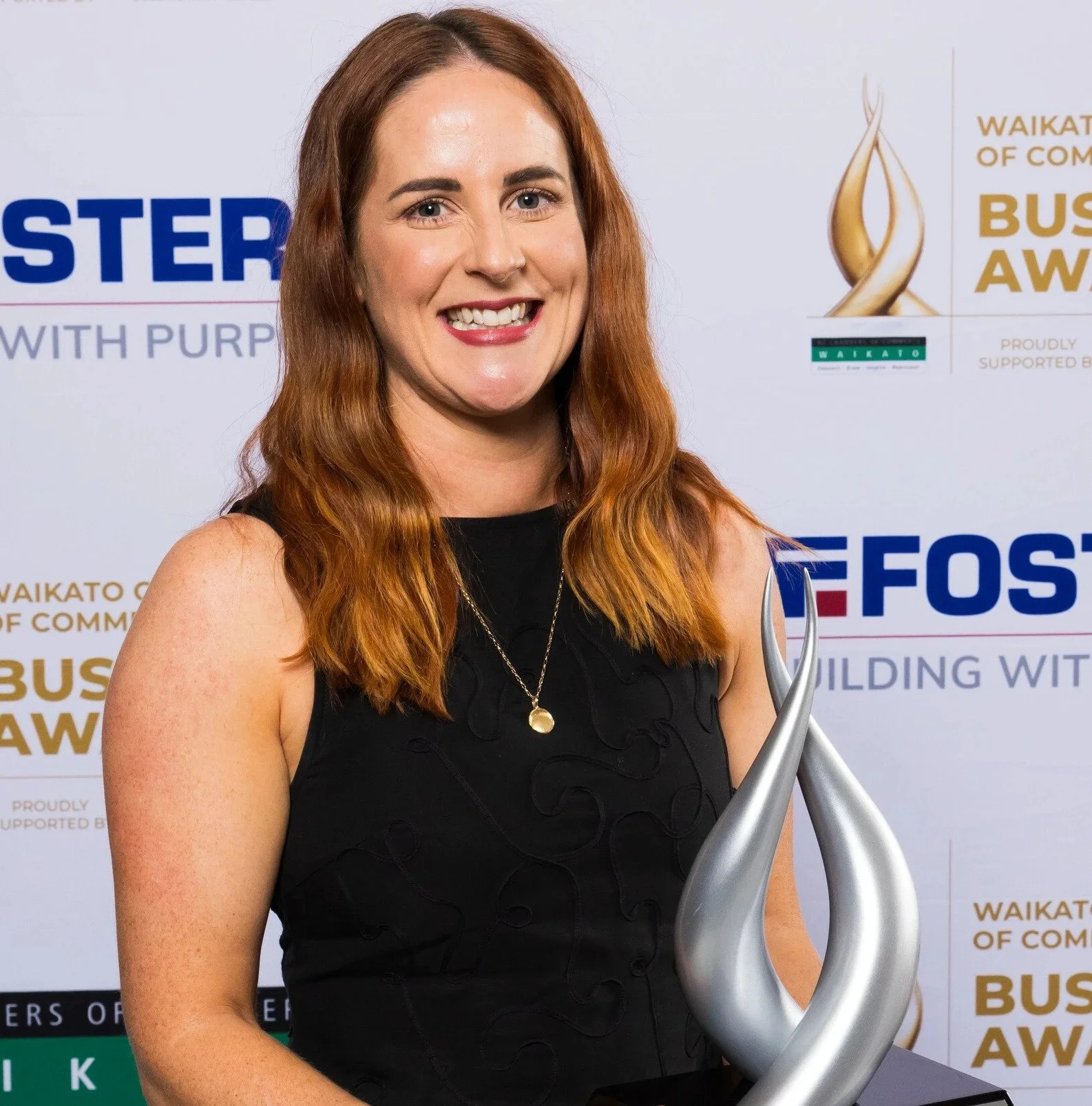
Ashley with her Emerging Leader award at the Waikato Chamber of Commerce awards last year.
Q: You mentioned briefly at the start that you worked in the UK. Was that your Overseas Experience (OE)? What advice would you give to people reading this who are thinking about doing the big OE?
A: Yes, that was my OE and I absolutely recommend that people do it – I have no regrets. An OE lets you drop inhibitions, discover who you are without judgement, immerse yourself in new cultures, and build resilience fast. It alone forces growth and the experience is unmatched - I loved it.
An OE lets you drop inhibitions, discover who you are without judgement, immerse yourself in new cultures, and build resilience fast. It alone forces growth and the experience is unmatched - I loved it.
Q: What does Ash stand for?
A: I think what I stand for is showing a real vulnerability and authentic version of myself. Hopefully that gives other people the courage to know that things don't need to look perfect or be right. I'm proud of who I am now. I stand for someone who is bold, authentic, courageous, and vulnerable. All those things combined, I hope, make me a great person, and most importantly, a great mum and wife - my number one roles in this world. Being able to relate to people by being vulnerable is extremely important to me.
I'm proud of who I am now. I stand for someone who is bold, authentic, courageous, and vulnerable. All those things combined, I hope, make me a great person, and most importantly, a great mum and wife - my number one roles in this world.
Q: What is next for yourself?
A: I’m genuinely really enjoying where I am now. I am driven to be uncomfortable and continue to learn, focusing on growing our business. On a personal level, I’m focused on slowing down and spending more time with my kids. As they get older, my ‘next’ is being there for them, being present, and showing them love with time.
Q: Our audience often consists of young professionals thinking about their financial futures. Do you have any wisdom or advice to offer them?
A: The one thing I wish I had taken seriously when I was younger was understanding the impacts of compounding interest. It’s so simple; just putting aside $20 a week and never touching it.
I also think it’s important to understand your relationship with money. I recommend the book The Psychology of Money. We don't often think about the psychology behind why we make the financial decisions we do. It can be incredibly beneficial to learn why you might be fearful of a budget or feel the need to purchase things when you are in a certain mood.
Q: What advice would you give your younger self?
A: Probably to love myself. My self-criticism and poor relationship with myself really hindered me from putting myself out there and having the courage to strive for bigger things.
Q: If neither time nor resources were a constraint, what ultimate goal or dream would you pursue or have pursued?
A: I’m genuinely content. Mum’s experience taught me I don’t need more money or things - just more time. If time nor resources were a constraint, I’d spend it taking my kids around the world, travelling together and soaking up new cultures. That’s the dream now: richer moments with family.
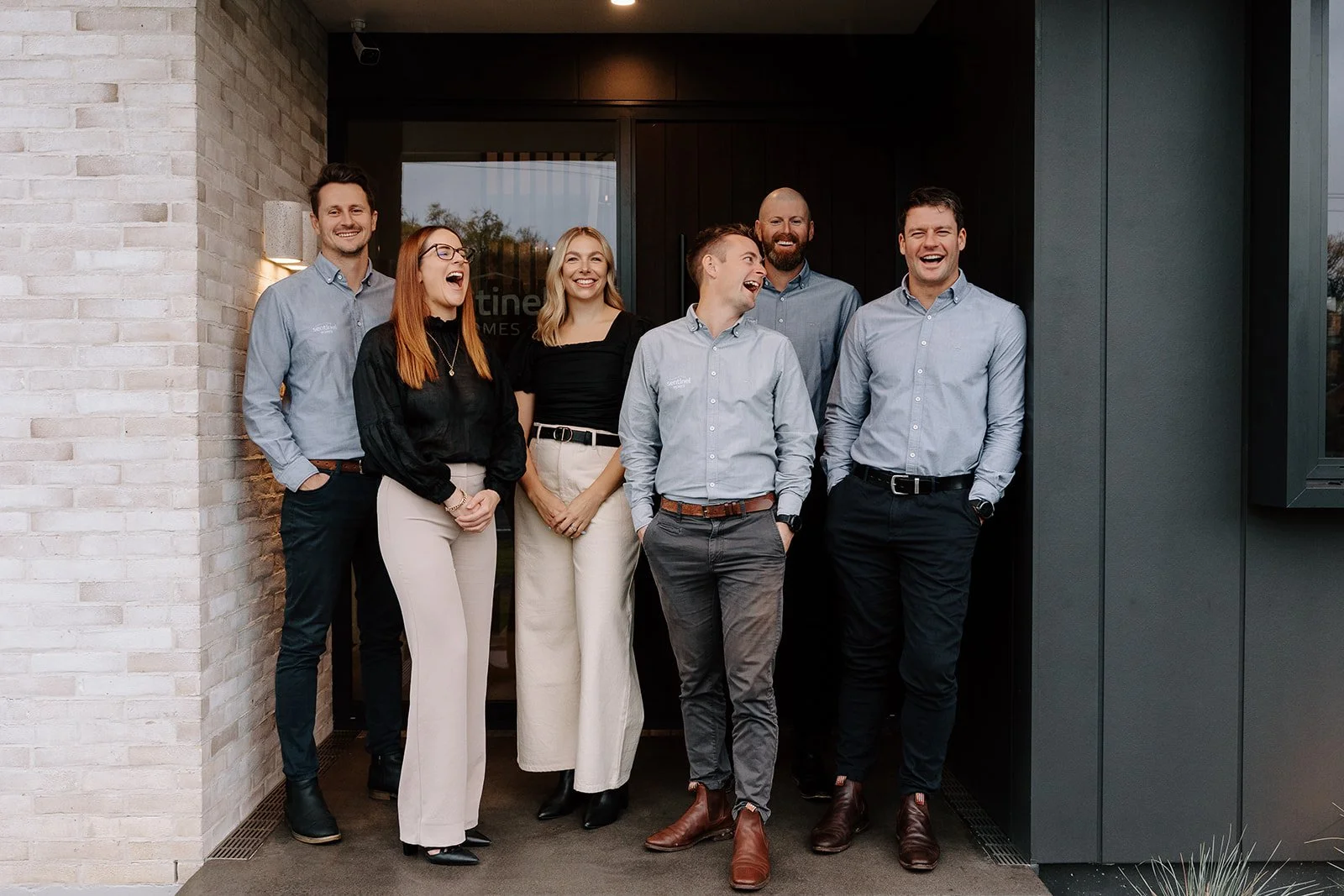
Ashley and some of the Sentinel Homes Waikato team.
About Sentinel Homes Waikato
Sentinel Homes Waikato is a trusted leader in residential construction, renowned for delivering custom-designed homes that blend style, functionality, and affordability. With a commitment to quality craftsmanship and client-focused service, the team at Sentinel Homes Waikato guides homeowners through every step of the building process. Their award-winning designs and dedication to sustainable building practices are helping shape vibrant communities throughout the region.
Visit the website here: https://www.sentinelhomes.co.nz/locations/waikato
About LIC (Livestock Improvement Corporation)
LIC (Livestock Improvement Corporation) is a New Zealand farmer‑owned agri‑tech co‑operative supporting dairy success through genetics, herd testing, data‑driven insights and farm software. With strong research and nationwide field services, LIC helps lift productivity, herd quality and sustainable practices across Aotearoa and abroad.
Visit the website here: https://www.lic.co.nz/
About University of Waikato
The University of Waikato is a leading tertiary institution in Aotearoa New Zealand, renowned for innovative research, diverse academic programmes, and a vibrant campus culture. With world-class teaching and strong industry connections, Waikato empowers future-ready graduates to make real impact across New Zealand and beyond.
Visit the website here: https://www.waikato.ac.nz/
